Professor of Morphology
My project in medicine that aims to provide pathologists and oncologists with a fast diagnostic tool, to use in the rapid, high-volume reality of clinical practice. Beyond a simple knowledge base, it provides a structured, visual, and workflow-centered system that helps doctors make quicker, clearer decisions when diagnosing tumors.
My role
End-to-end product development: from hypothesis generation to delivery-ready design
Conducted CustDev (20+ interviews) and usability testing to validate product direction
End-to-end design: UX/UI, visual identity, design system
Defined product strategy, success metrics, featureset and roadmap
Assembled a small team and managed the development process
Project overview
The project began with an idea to help oncologists with differential diagnosis. We created a quick MVP and tested it with 100 doctors, receiving strong positive feedback.
Next, through 20+ in-depth interviews with pathologists and oncologists, we discovered deeper pains: lack of practical reference tools, diagnostic uncertainty, and limited access to peer expertise. These insights formed the final product vision and defined our core hypotheses.
We defined the version 1 feature set, built and tested interactive workflow prototypes with doctors, and confirmed the product direction. After finalizing UX, UI, and the design system, the project moved into development, with release planned for Q2 2026.
Knowledge base
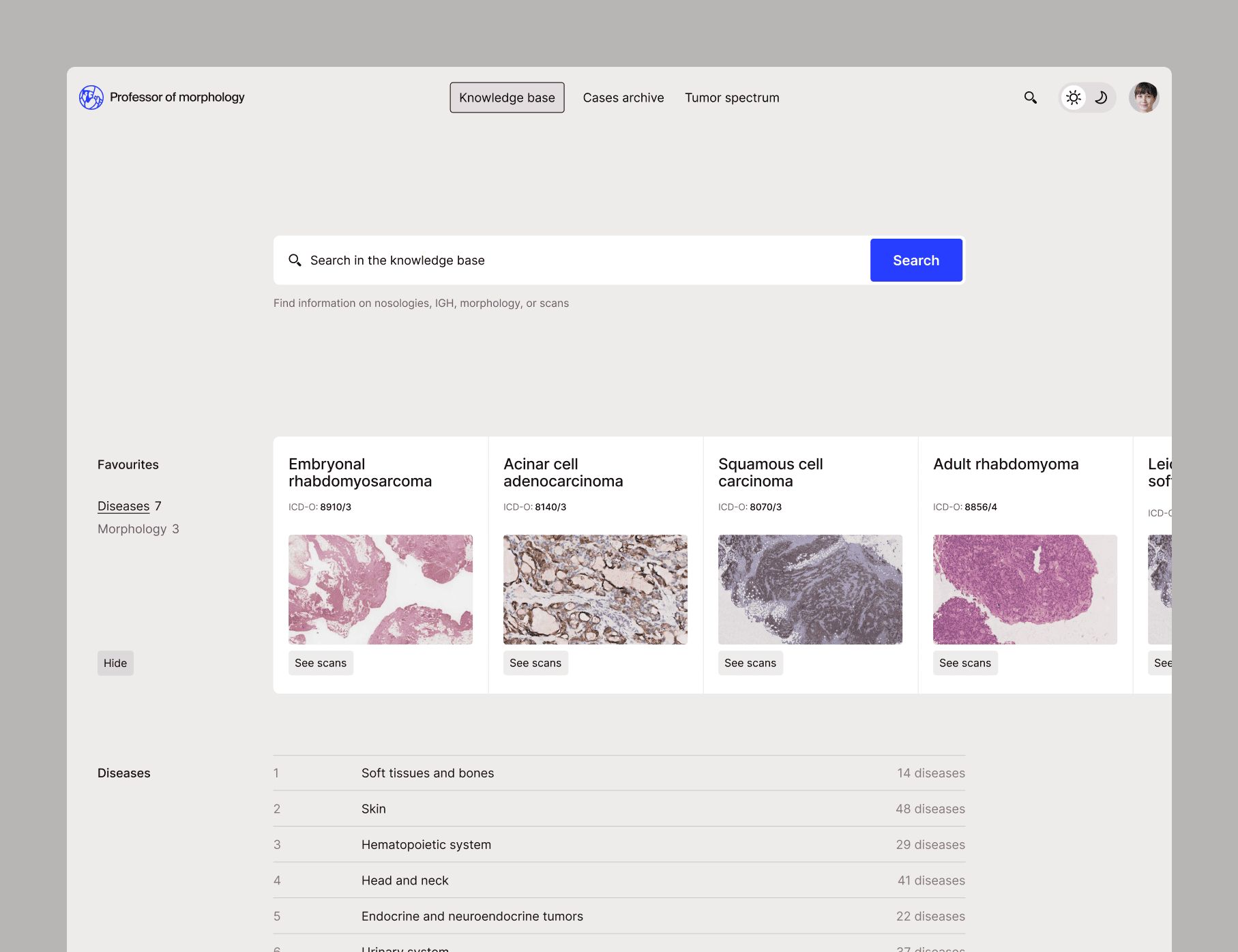
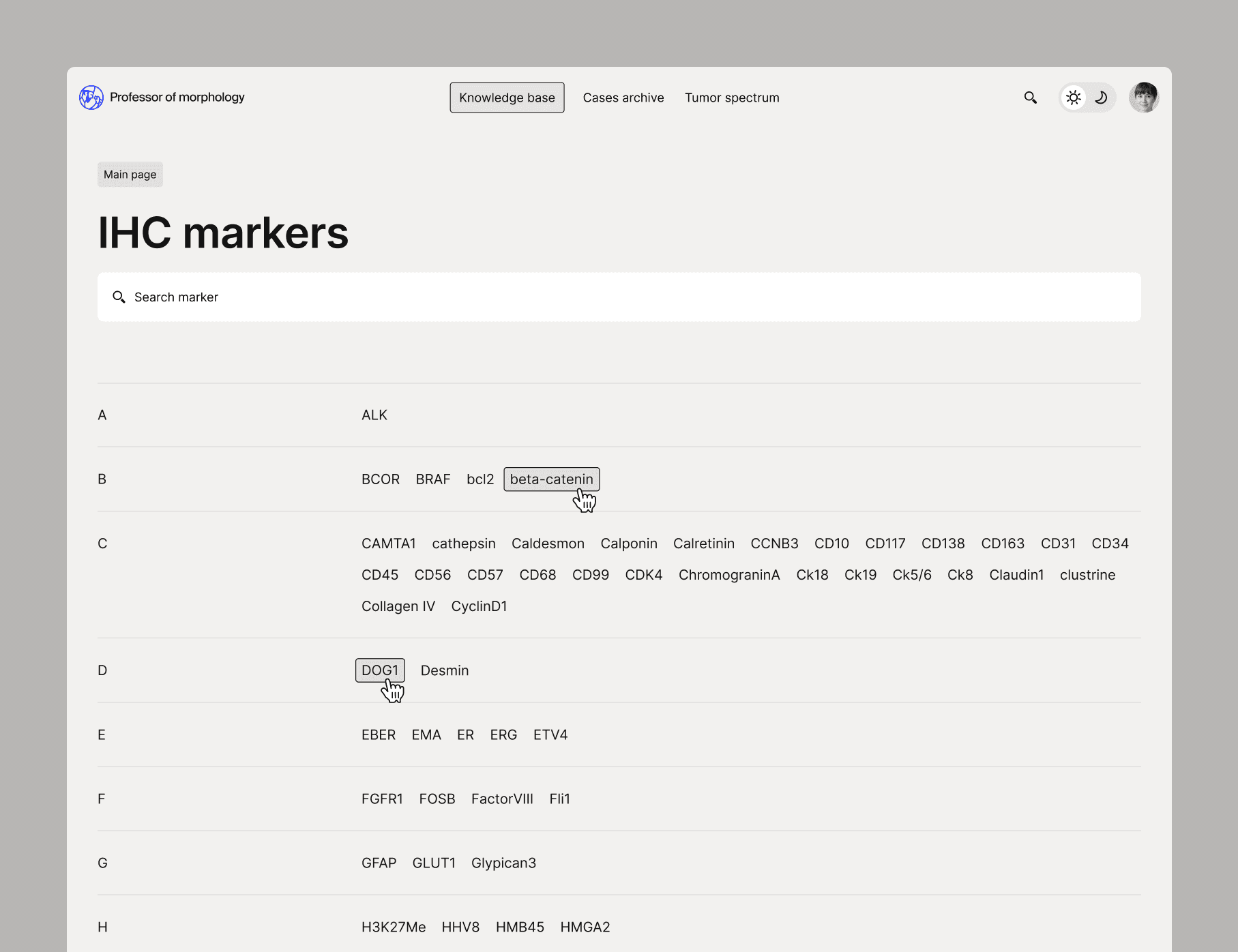
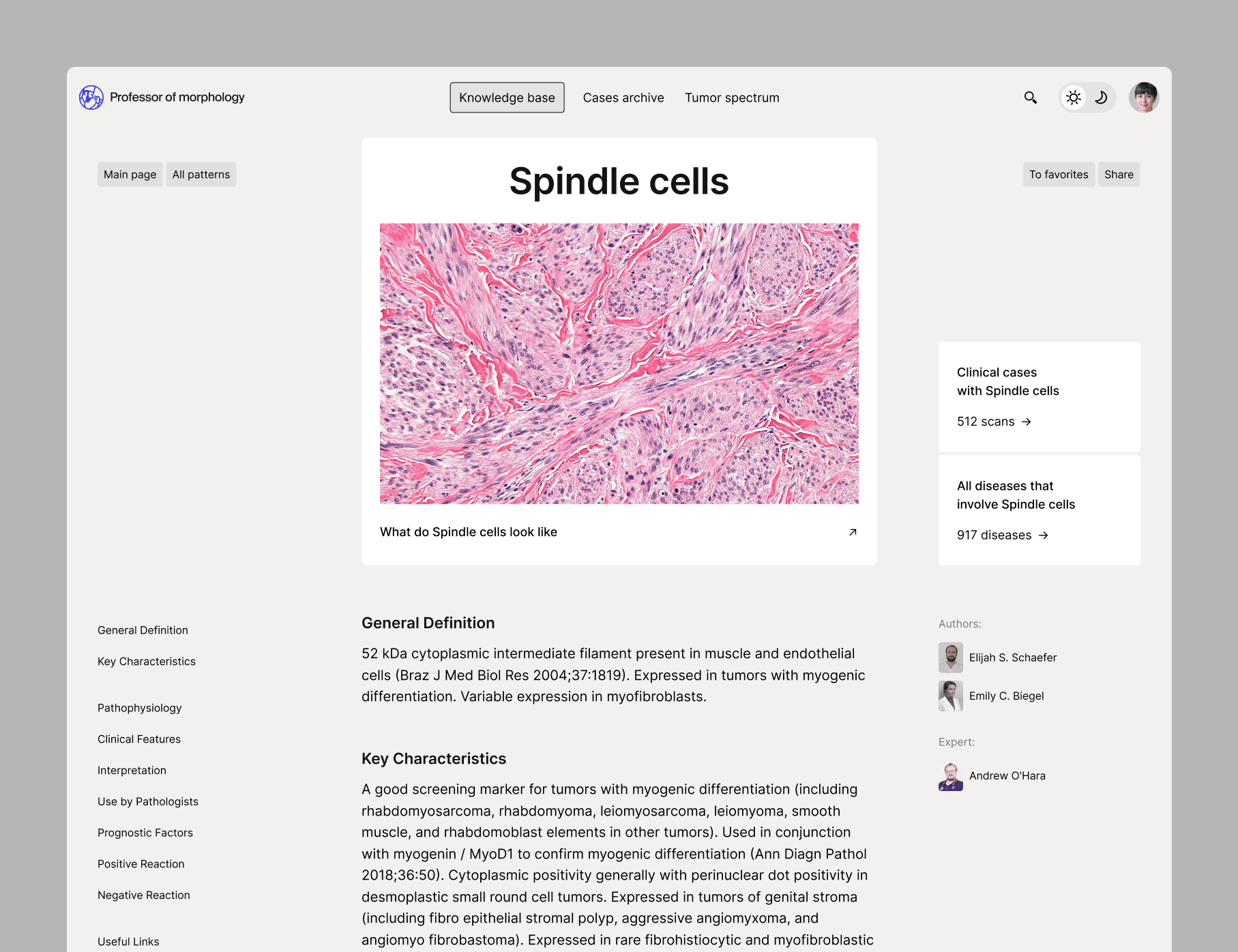
The primary section for the Professor is the knowledge base, designed to provide the doctor with quick access to necessary information. This allows the pathologist to swiftly generate a spectrum of tumors for differential diagnosis, enhancing both the speed and accuracy of the diagnosis.
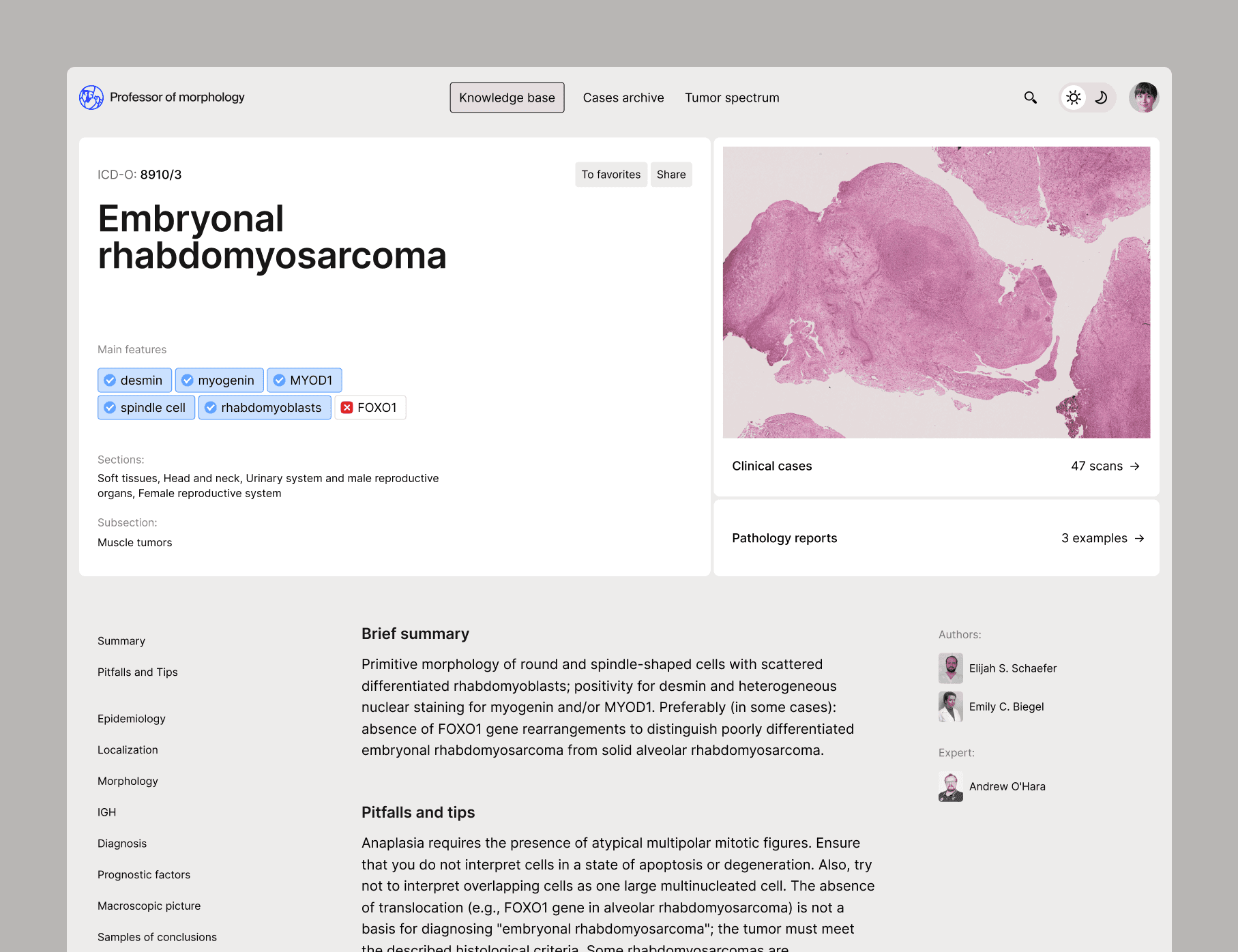
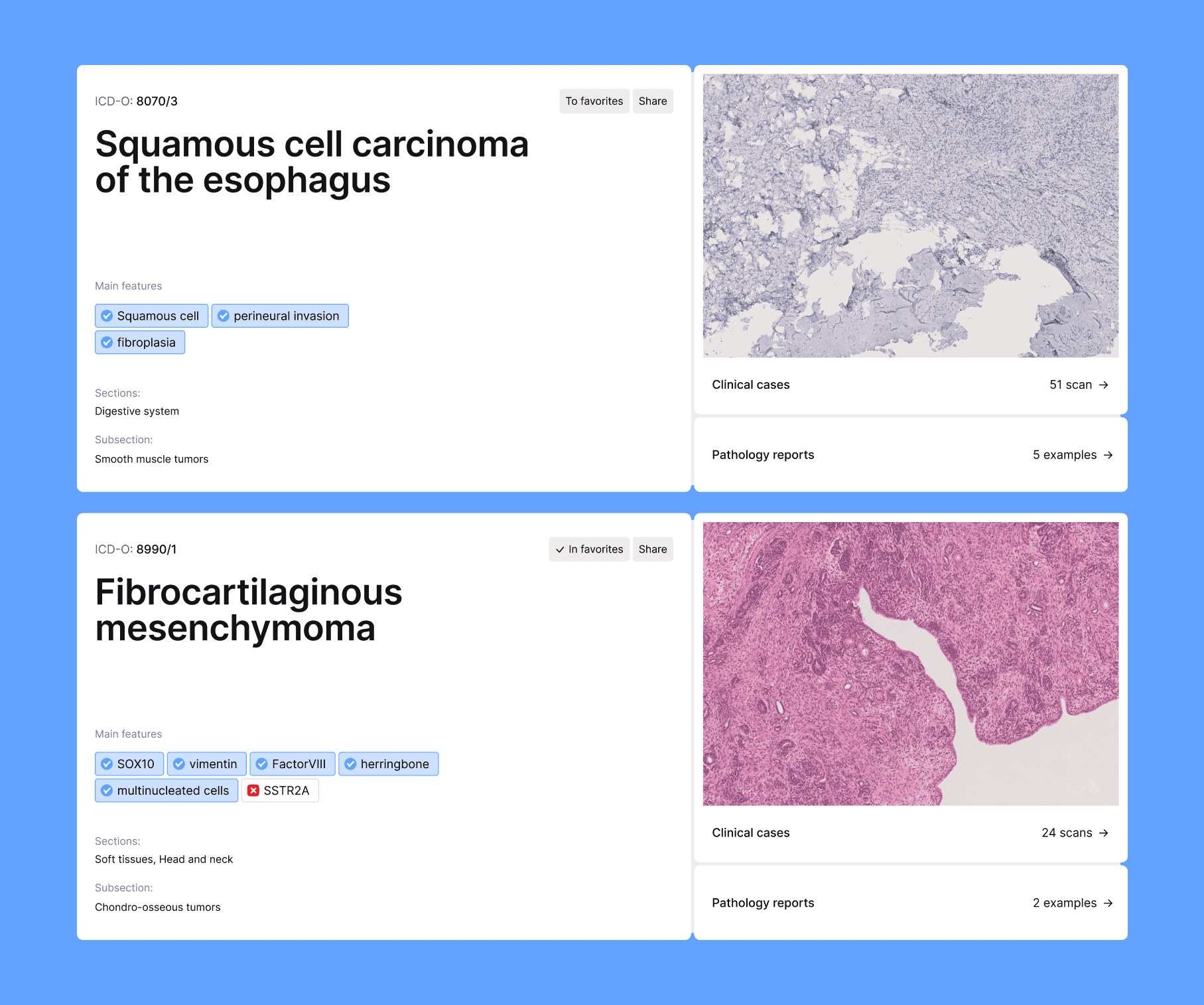
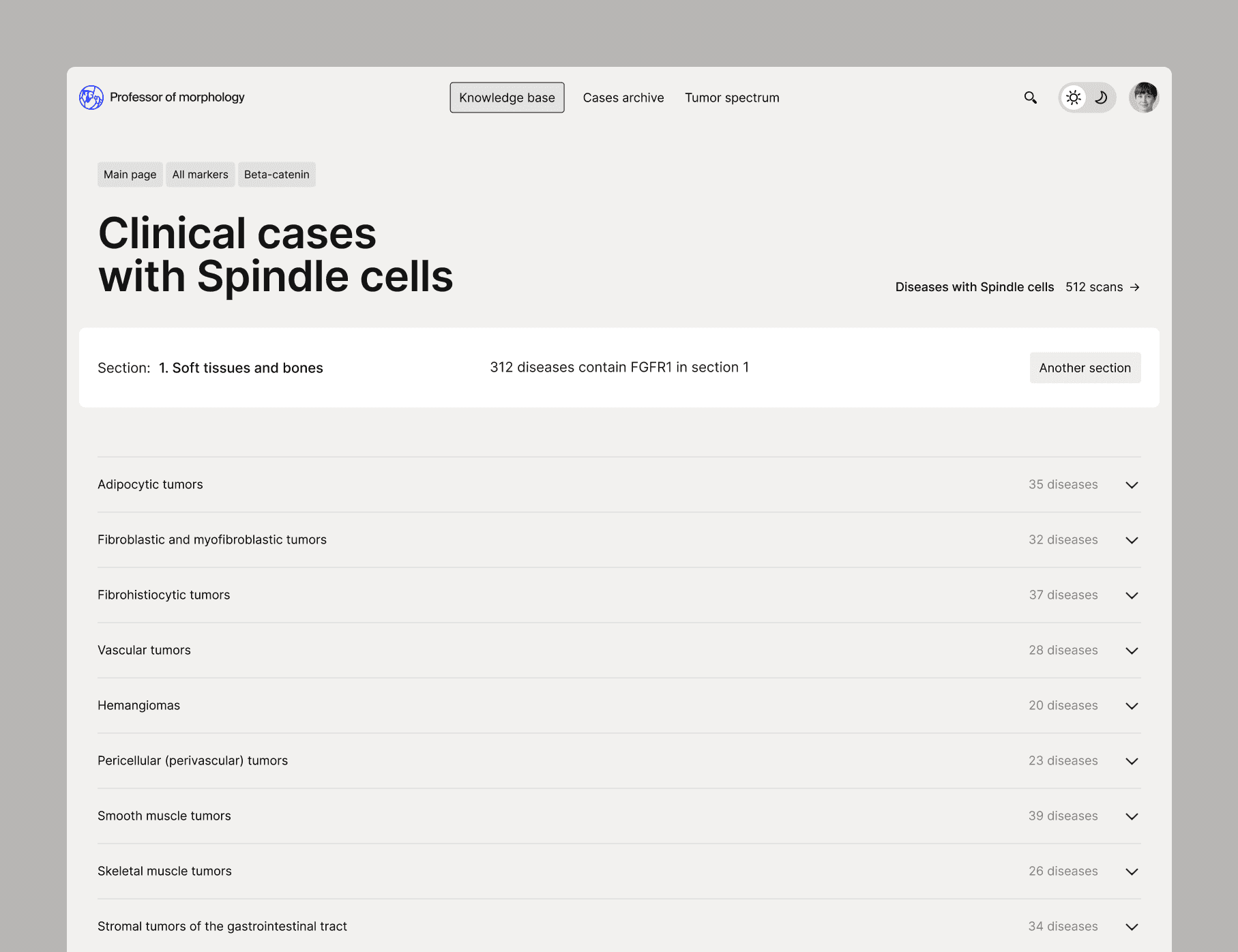
The most important thing for a doctor is access to examples of clinical cases, because they provide practical experience, help recognize patterns in real patients, and improve diagnostic and decision-making skills in a way that theory alone cannot.
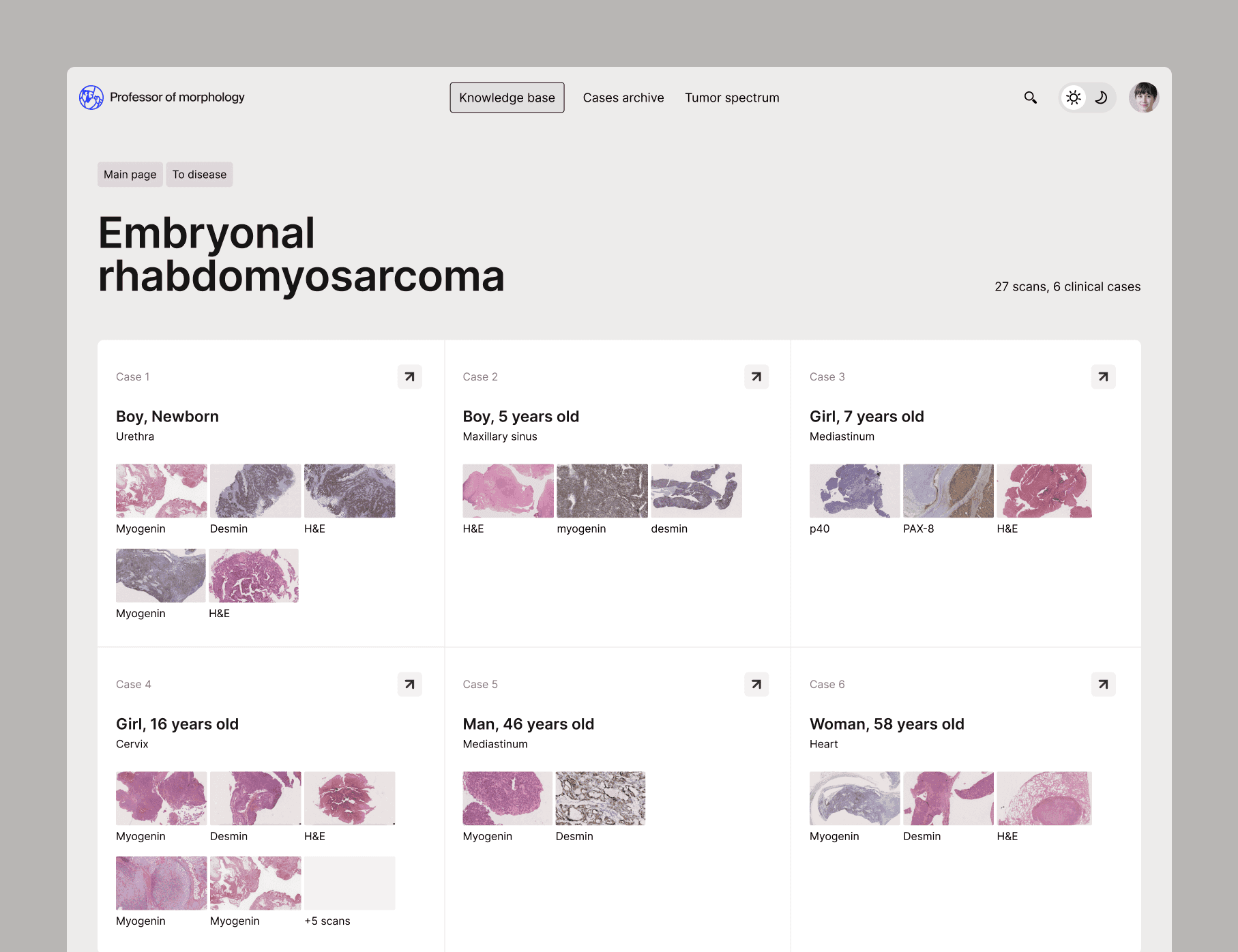
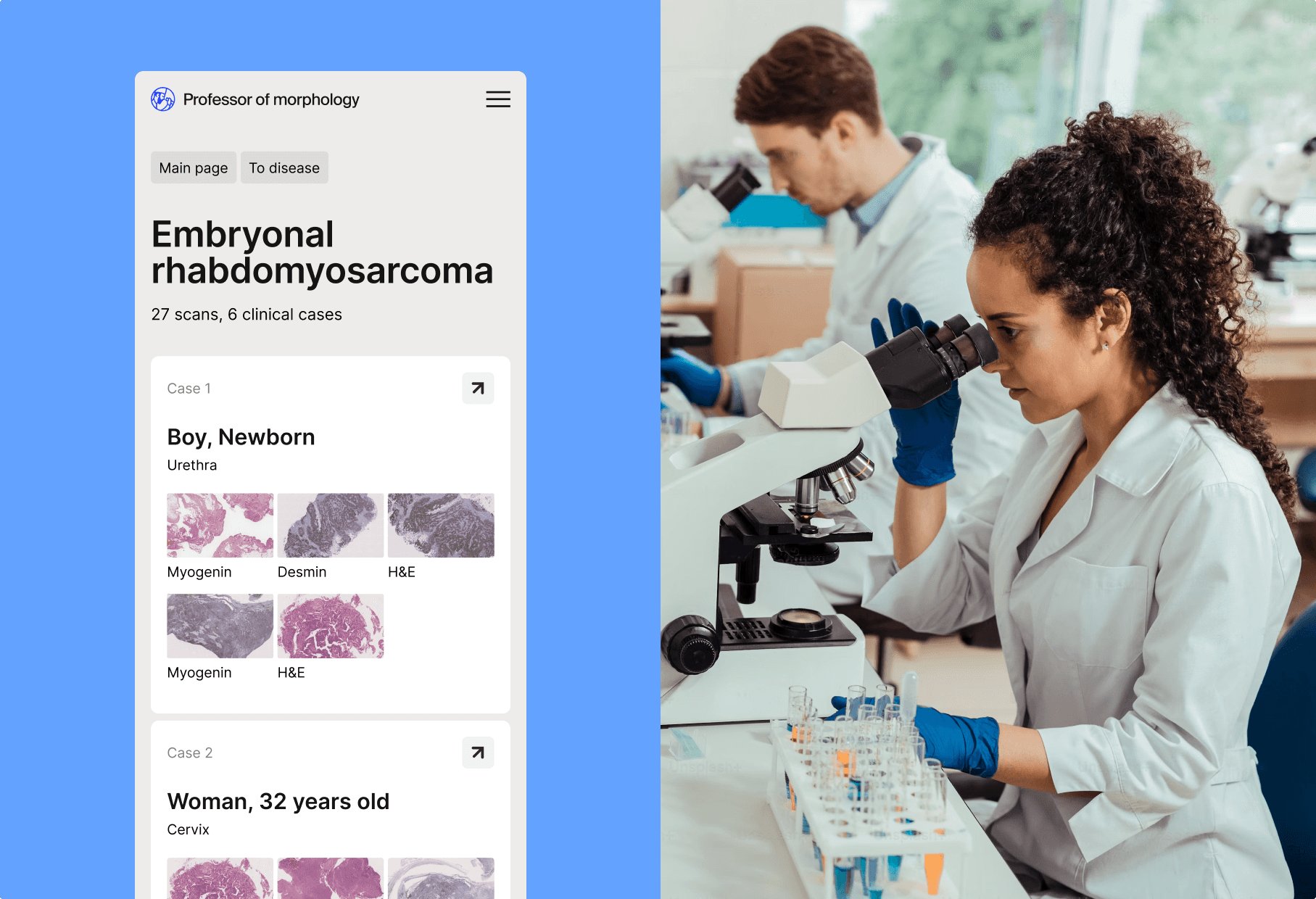
Hi-res scans of tissues
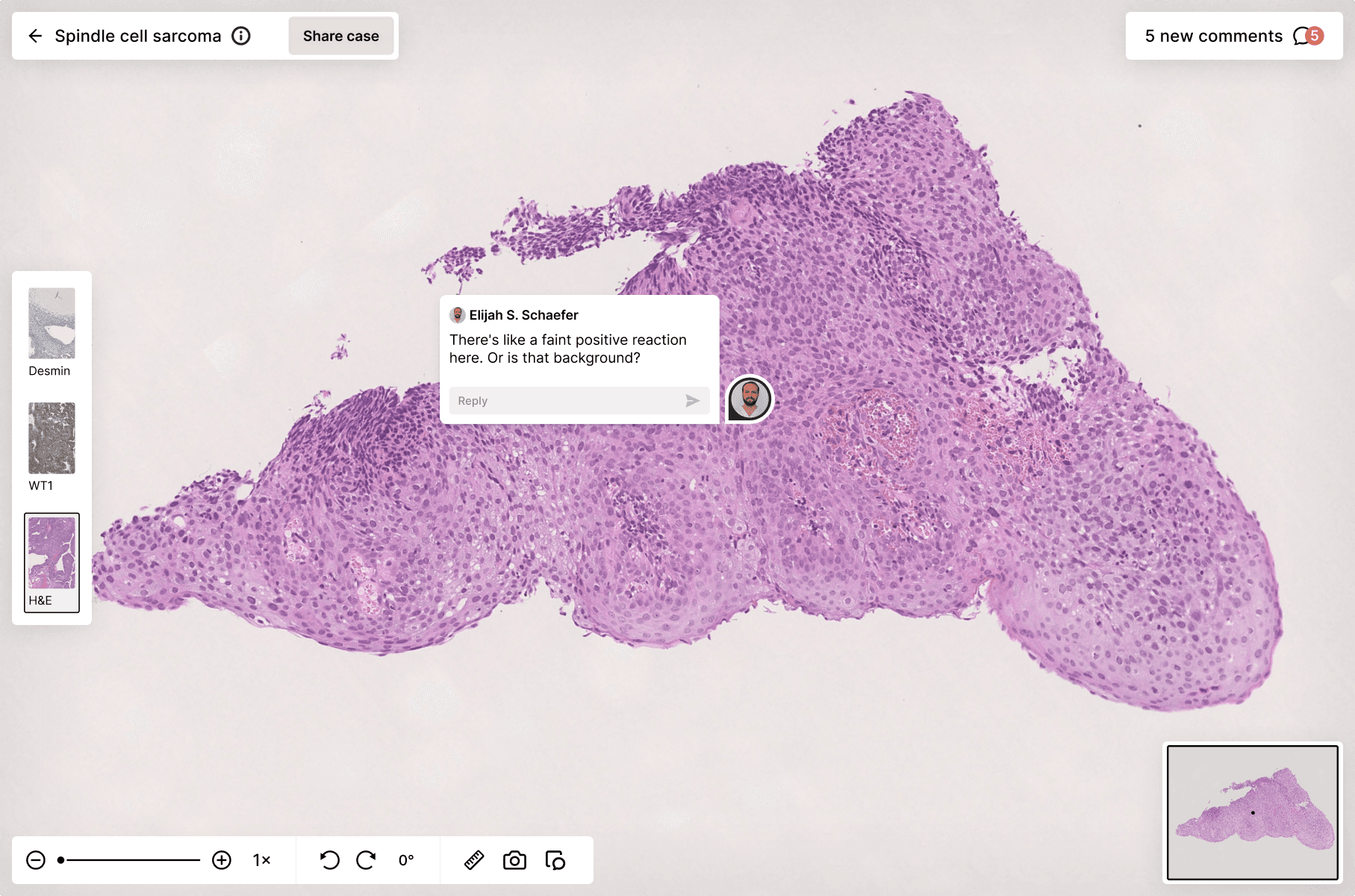
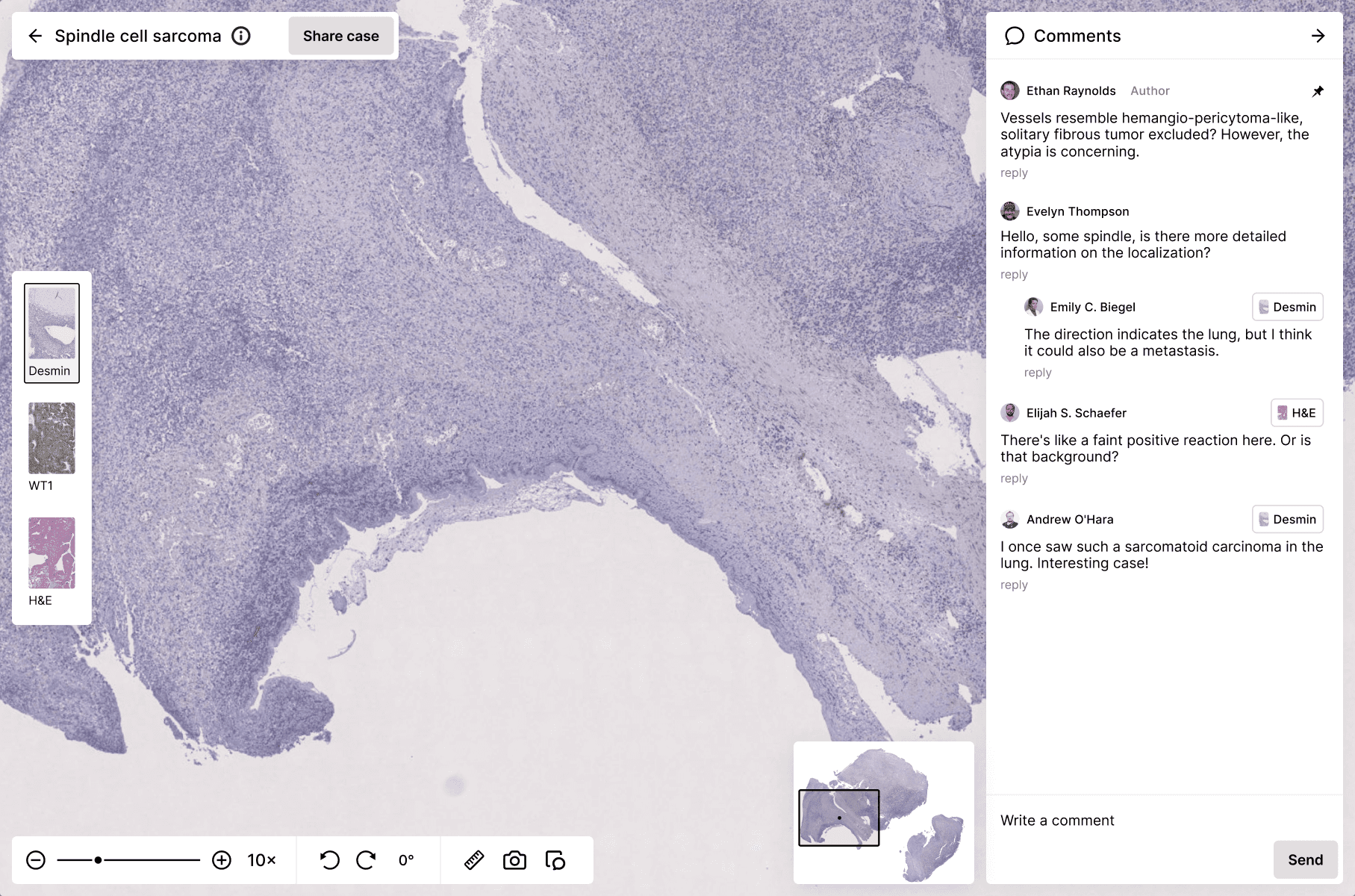
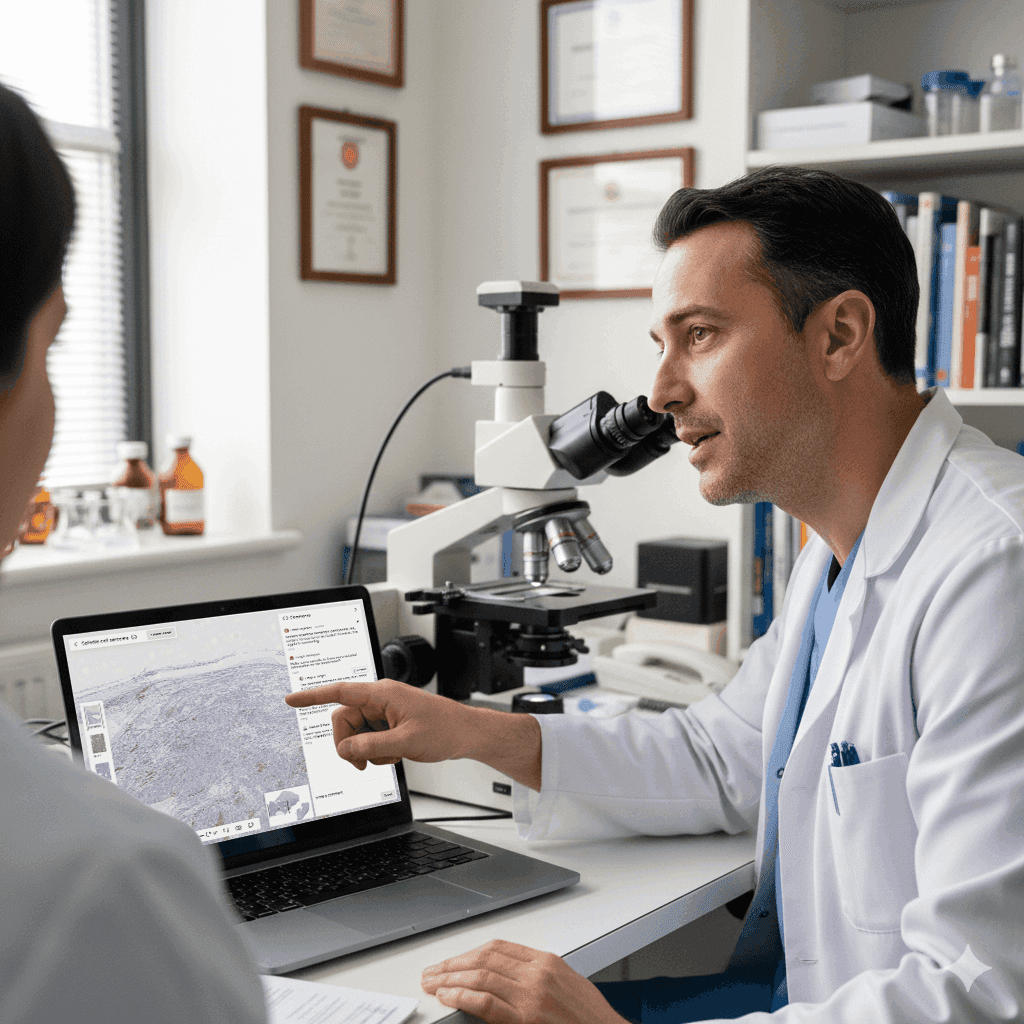
The pathologist's main diagnostic tool is the microscope, used to identify cellular patterns in tissue. Visual experience and keen observation are crucial. A key function of the Professor is to collect and view tissue scans.
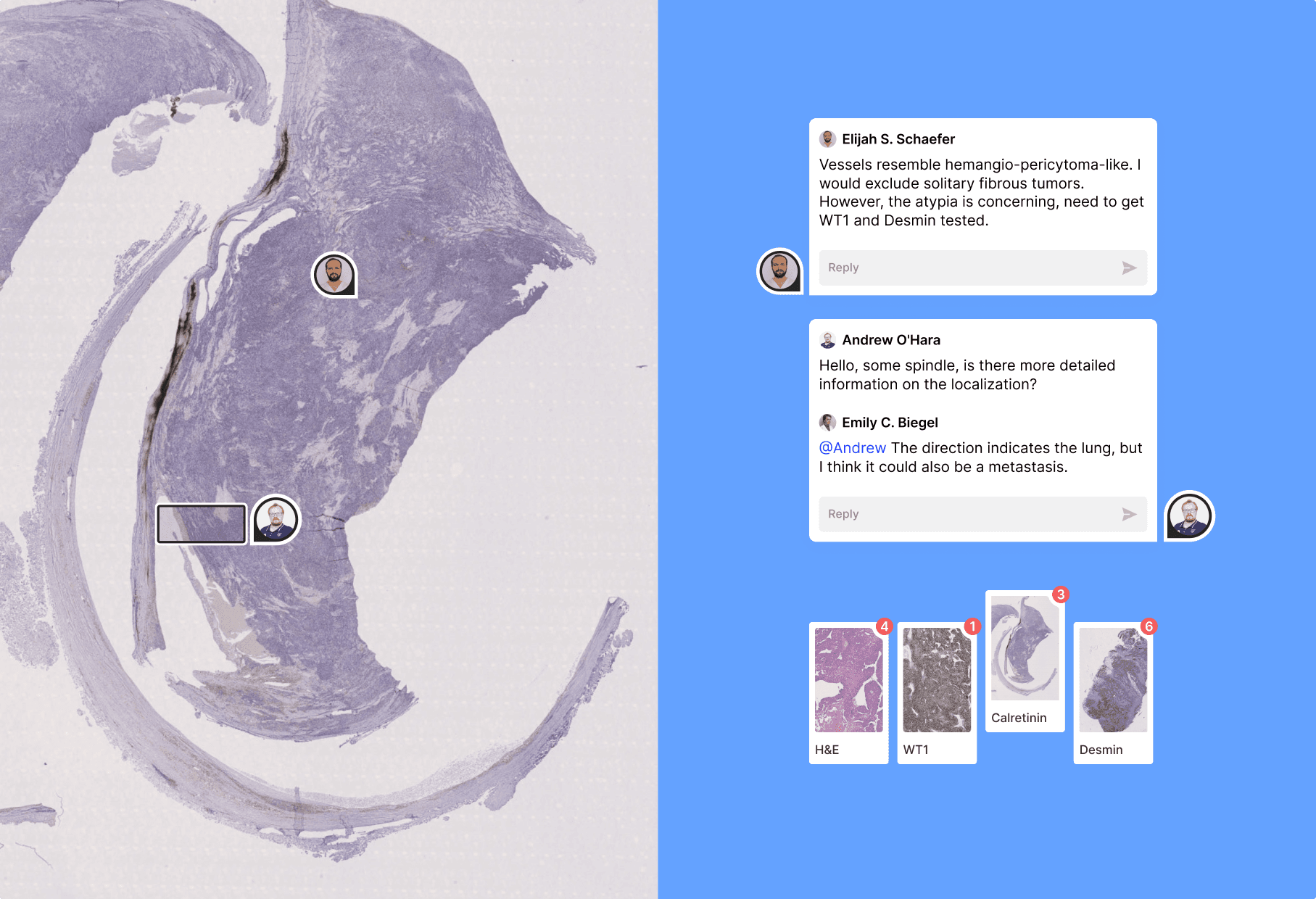
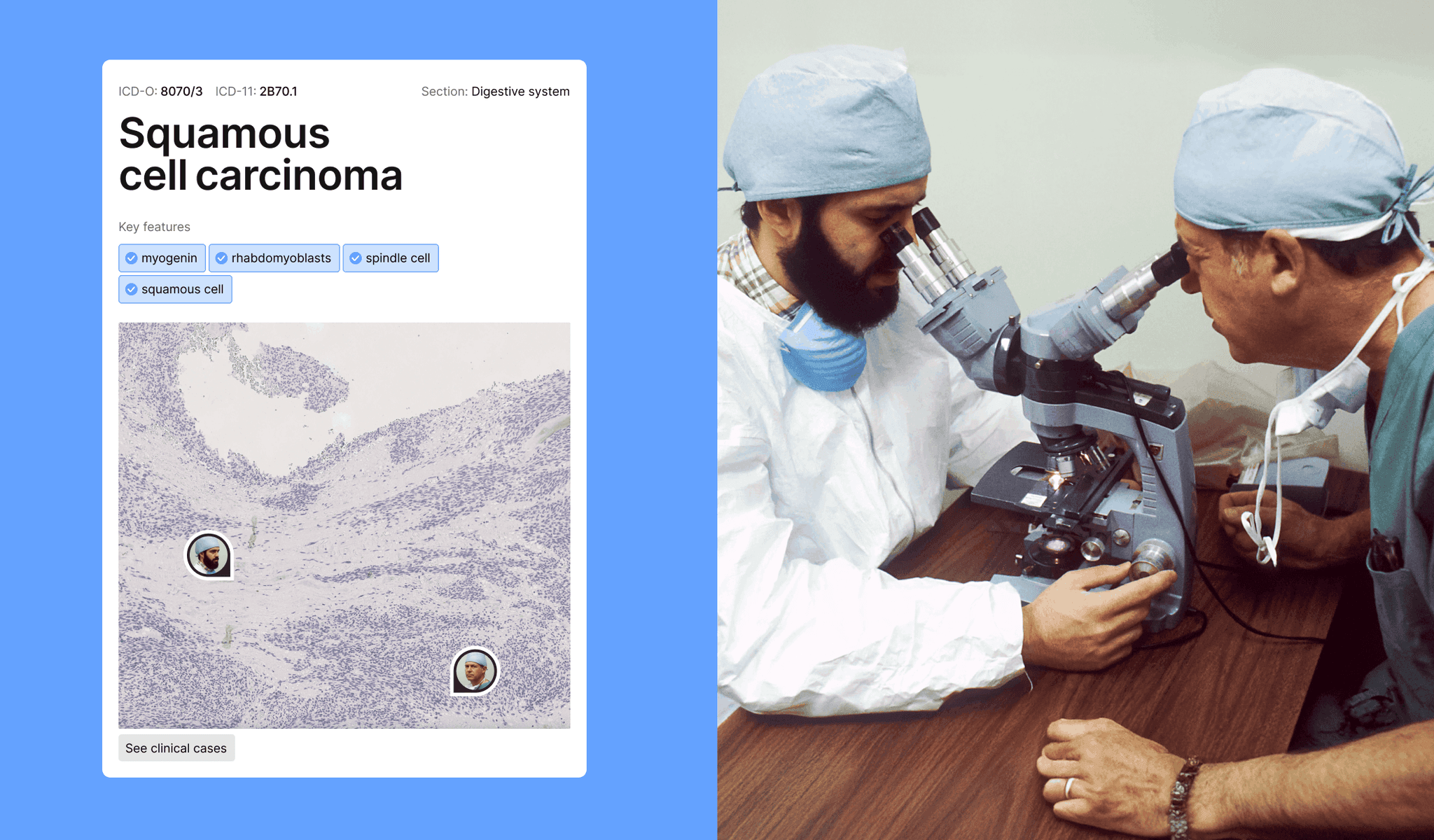
The professor can be used as a reference tool during microscopy. Doctor compare what they see in their patient tissue with curated gallery of morphology patterns.
Tumor spectrum identifier
Video
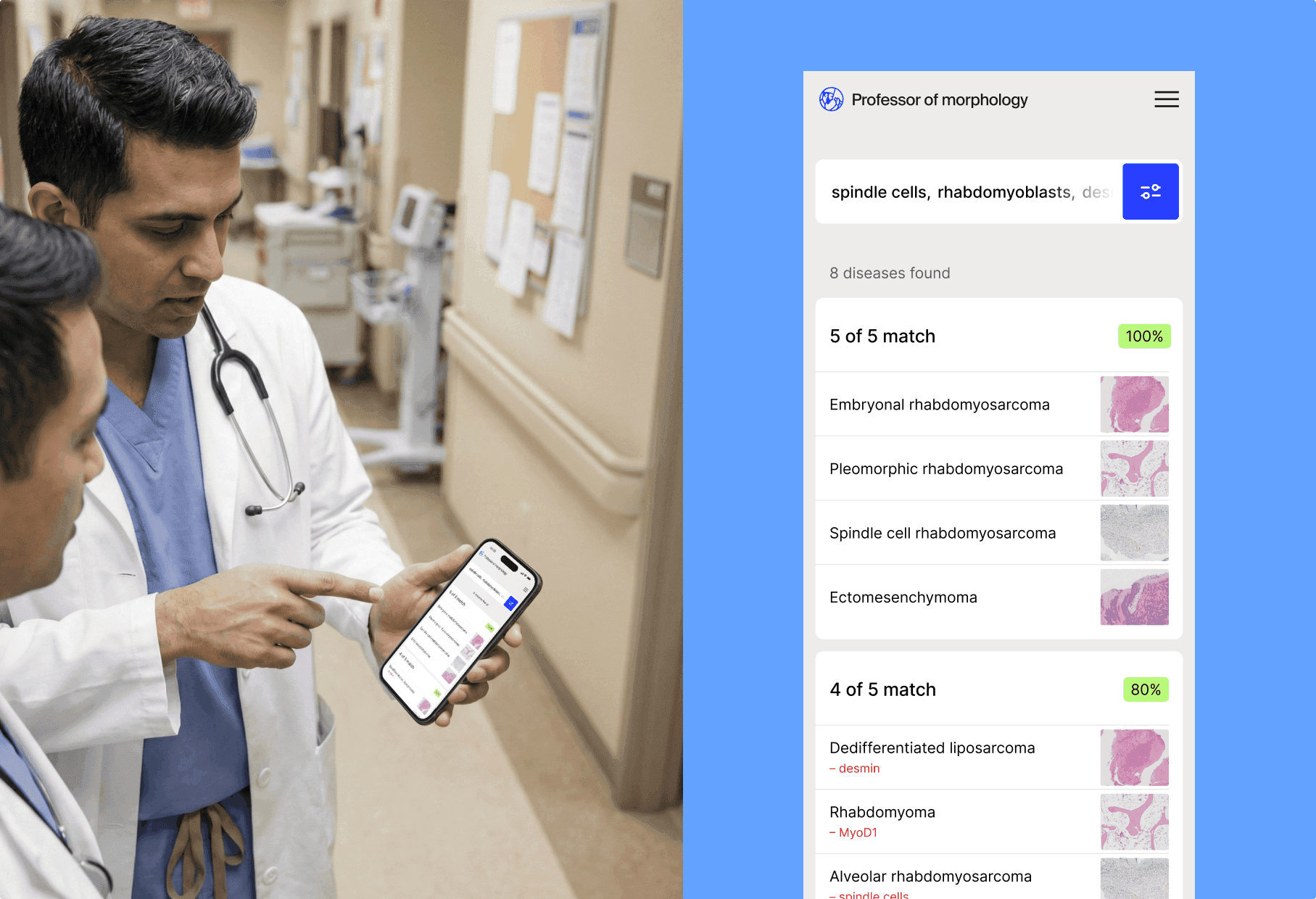
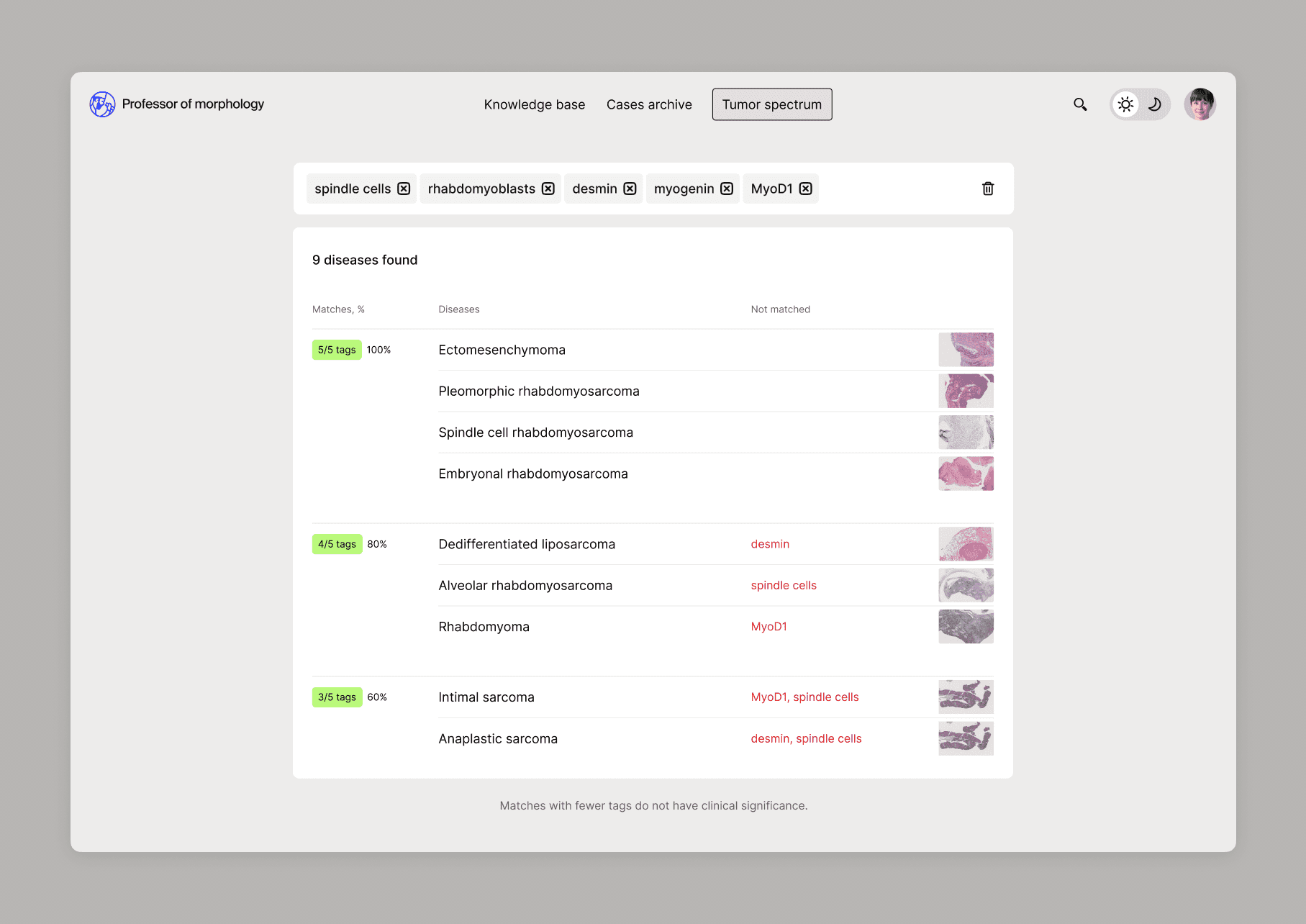
With around 1,600 types of cancer, even the most experienced pathologists can struggle to identify specific tumors. The spectrum tool narrows the search, offering a list of potential diseases for differential diagnosis.
Immuno-chemistry and morphology